 developer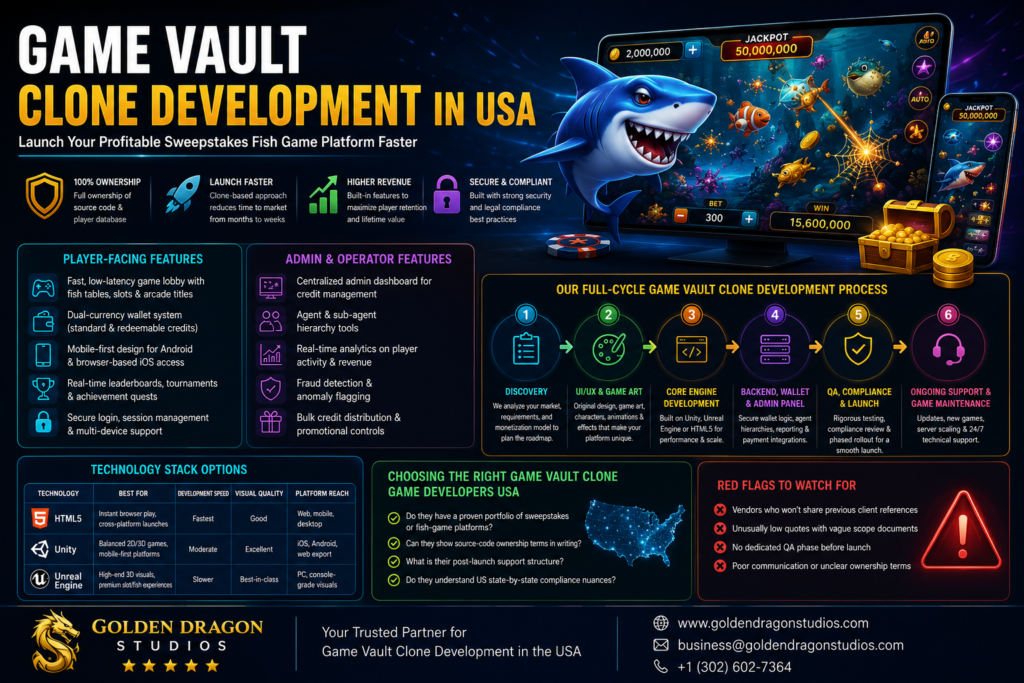
Introduction
The sweepstakes and fish-game gaming market has exploded across the United States over the past few years, and operators are searching for a reliable way to enter it fast. That’s exactly why Game Vault clone development in the USA has become one of the most-searched services among gaming entrepreneurs, casino operators, and startup founders this year.
Building a platform from the ground up can take a year or more. A clone-based approach, done correctly by an experienced studio, compresses that timeline into weeks while still delivering a fully customized, legally structured, and technically sound product. This guide walks you through everything you need to know before you commit to a development partner — from architecture and compliance to cost, timeline, and the mistakes that sink most launches.
Whether you’re a startup founder testing the waters or a game studio owner scaling a multi-brand operation, this blueprint gives you the practical, real-world knowledge to make an informed decision.
What Is Game Vault and Why Are Operators Cloning It?
The Rise of the Sweepstakes Fish-Game Model
Game Vault popularized a specific format: fish table games, slot-style titles, and arcade formats wrapped in a virtual coin economy. This structure allows operators to offer engaging, casino-style entertainment in states where traditional real-money online gambling is restricted.
Why Businesses Want a Custom Version
Operators rarely want to run someone else’s brand forever. A cloned platform gives them:
- Full ownership of the software and player database
- The ability to rebrand, reskin, and expand the game catalog
- Control over payment processing, agent networks, and player management
- Freedom from third-party platform fees and shutdown risk
Understanding Search Intent Behind This Keyword
People searching for Game Vault clone development USA are almost always in a commercial or transactional mindset. They already understand the business model and are comparing vendors, evaluating cost, or ready to request a quote. This is different from someone researching “what is a sweepstakes casino,” who is still in the informational stage. Content built around this keyword needs to answer buyer questions directly: cost, timeline, features, legality, and vendor selection criteria.
Core Features Every Game Vault Style Platform Needs
Player-Facing Features
- Fast, low-latency game lobby with fish tables, slots, and arcade titles
- Dual-currency wallet system (standard credits and redeemable credits)
- Mobile-first design for Android and browser-based iOS access
- Real-time leaderboards, tournaments, and achievement quests
- Secure login, session management, and multi-device support
Admin & Operator Features
- Centralized admin dashboard for credit management
- Agent and sub-agent hierarchy tools
- Real-time analytics on player activity and revenue
- Fraud detection and anomaly flagging
- Bulk credit distribution and promotional controls
Golden Dragon Studios’ Full-Cycle Game Vault Clone Development Process
Step 1: Discovery and Business Requirement Mapping
Every engagement starts with understanding your target states, player base, and monetization model. This shapes the entire technical roadmap before a single line of code is written.
Step 2: UI/UX and Game Art Design
Our game art and animation team builds original visual assets — fish characters, slot reels, backgrounds, and effects — so your platform never feels like a copy-paste job.
Step 3: Core Engine Development
Depending on performance needs, our team builds on Unity or Unreal Engine for rich 2D/3D visuals, or a lightweight HTML5 stack for instant browser play with no downloads.
Step 4: Backend, Wallet, and Admin Panel Build
This is where the real engineering happens: secure wallet logic, agent hierarchies, reporting tools, and API integrations for payment processors.
Step 5: QA, Compliance Review, and Launch
Rigorous testing across devices, followed by a compliance pass and a phased rollout, minimizes post-launch surprises.
Step 6: Ongoing Game Maintenance & Support
Post-launch, our support team handles patches, new game additions, server scaling, and security monitoring so operators can focus on growth.
Technology Stack Options: Unity vs. Unreal Engine vs. HTML5
| Technology | Best For | Development Speed | Visual Quality | Platform Reach |
|---|---|---|---|---|
| HTML5 | Instant browser play, cross-platform launches | Fastest | Good | Web, mobile, desktop |
| Unity | Balanced 2D/3D games, mobile-first platforms | Moderate | Excellent | iOS, Android, web export |
| Unreal Engine | High-end 3D visuals, premium slot/fish experiences | Slower | Best-in-class | PC, console-grade visuals |
Choosing the Right Game Vault Clone Game Developers USA
Questions to Ask Before You Sign a Contract
- Do they have a proven portfolio of sweepstakes or fish-game platforms?
- Can they show source-code ownership terms in writing?
- What is their post-launch support structure?
- Do they understand US state-by-state compliance nuances?
Red Flags to Watch For
- Vendors who won’t share previous client references
- Unusually low quotes with vague scope documents
- No dedicated QA phase before launch
- Lack of clarity on who owns the final source code
Cost Breakdown: What Influences Game Vault Clone Development Pricing
Primary Cost Drivers
- Number of game titles included at launch
- Engine choice (HTML5 is typically more budget-friendly than Unreal Engine)
- Complexity of the agent/admin hierarchy
- Custom art and animation volume
- Payment gateway and compliance integrations
Typical Investment Ranges
Most Game Vault style clone projects fall into a mid-range custom software investment, with pricing shaped heavily by the number of games and depth of admin tooling requested. A detailed quote from a Game Vault Clone Game Development Company should always break costs down by phase rather than presenting a single lump sum.
Legal and Compliance Considerations for US Operators
State-by-State Variability
Sweepstakes gaming legality varies significantly across states. A responsible development partner builds in geo-fencing and configurable rule sets so operators can adapt quickly as regulations shift.
Building Compliance Into the Platform, Not Bolting It On
Compliance features — such as transparent terms and conditions displays, clear currency separation, and audit-ready reporting — perform best when they’re part of the original architecture, not an afterthought added after a legal review.
Scaling Your Platform After Launch
Adding New Games Without Downtime
A modular architecture lets you add new fish tables or slot titles as seasonal content without touching the core wallet or admin systems.
Expanding Into Multi-Brand Operations
Many operators eventually run several branded platforms from one backend. Planning for this from day one saves high re-engineering costs later.
Expert Tips and Best Practices
- Start with a minimum viable game catalog and expand based on player data, not guesswork
- Invest in original game art early — visual differentiation drives player retention
- Choose a development partner offering game maintenance and support, not just a one-time build
- Test payment and credit flows extensively before any public launch
- Build your admin dashboard with non-technical staff in mind
Common Mistakes to Avoid
- Skipping the discovery phase and jumping straight into design, which leads to costly rework
- Underestimating backend complexity, especially agent hierarchy and wallet logic
- Ignoring mobile performance testing across low-end Android devices
- Choosing the cheapest vendor without verifying source-code ownership terms
- Launching without a support plan, leaving the platform vulnerable to unresolved bugs
FAQs
1. What is Game Vault clone development?
It’s the process of building a custom gaming platform inspired by the Game Vault model — fish tables, slots, and a virtual coin economy — but fully owned and branded by the operator commissioning it.
2. How long does it take to build a Game Vault-style platform?
Timelines typically range from a few weeks for a streamlined HTML5 build to several months for a full Unity or Unreal Engine platform with an extensive game library.
3. Is Game Vault clone development legal in the USA?
Legality depends on how the platform is structured and which states it operates in. Working with a Game Vault Clone Game Development Company experienced in US compliance is essential.
4. Can I add more games after launch?
Yes. A well-architected platform is built modularly, allowing new titles to be added without disrupting existing player accounts or wallets.
5. Do I own the source code after development?
Reputable Game Vault Clone Game Developers USA should provide full source-code ownership as part of the contract. Always confirm this in writing before signing.
6. What engine is best for a fish-game platform?
HTML5 suits fast, cross-platform launches; Unity balances speed and visual quality; Unreal Engine suits operators wanting premium, high-fidelity visuals.
7. How much does it cost to develop a Game Vault clone?
Cost varies based on game count, engine choice, and admin complexity. A transparent, phase-by-phase quote is the best way to understand your specific investment.
8. Does the platform work on both iOS and Android?
Yes, when built correctly. Android typically supports native app distribution, while iOS access is generally delivered through a browser-based experience.
9. What ongoing support should I expect after launch?
Look for a partner offering game maintenance and support, including bug fixes, server scaling, security monitoring, and new content updates.
10. Why choose Golden Dragon Studios for this project?
Golden Dragon Studios offers full-cycle Game Vault clone development — from game art and engine development to compliance-aware architecture and long-term support — under one roof.
Conclusion
Launching a successful sweepstakes gaming platform takes more than copying an existing app — it requires the right engine choice, a compliance-aware architecture, original game art, and a development partner who sticks around after launch. Game Vault clone development USA projects succeed when operators pair a clear business plan with an experienced, full-cycle studio.
Call to Action
Ready to build a sweepstakes gaming platform that’s fully yours? Golden Dragon Studios specializes in Game Vault clone development, from concept and game art to launch and long-term support. Contact our team today for a free consultation and a transparent project quote — and turn your gaming business idea into a live platform.