 developer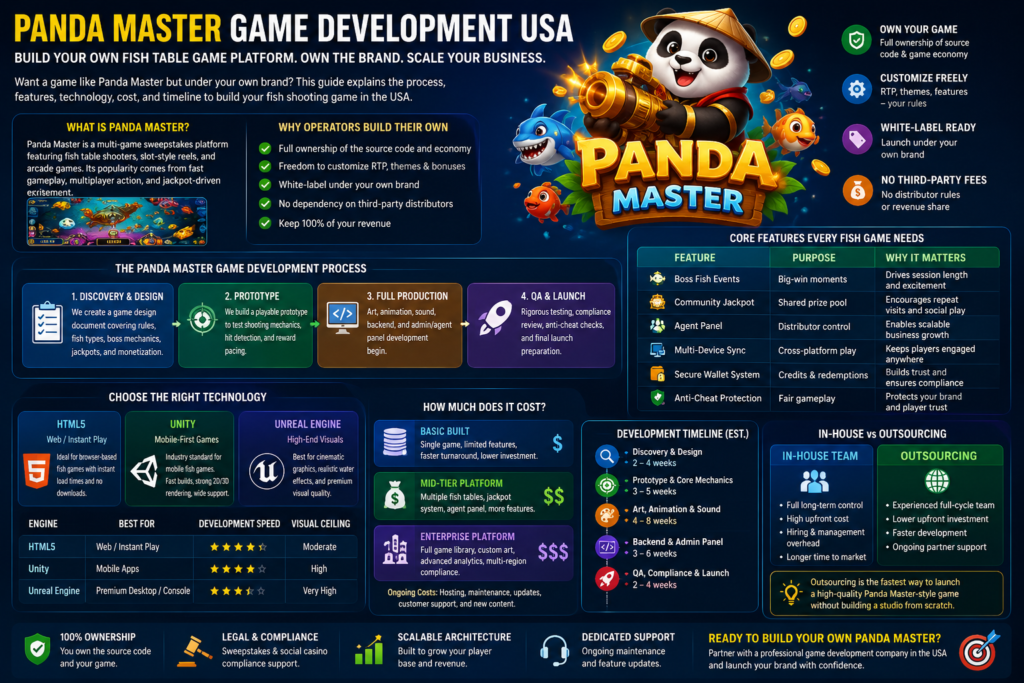
Introduction
Fish table games have quietly become one of the most profitable corners of the American sweepstakes and arcade gaming market. Panda Master is one of the names players recognize most, and its mix of fast-paced shooting mechanics, community jackpots, and slot-style bonus rounds keeps players coming back for more.
If you’re a casino operator, gaming lounge owner, or startup founder, you’ve probably searched for Panda Master game development USA because you want a similar product — but one that you actually own, control, and can scale on your own terms. This guide walks through what that process really looks like, from planning to launch, and what separates a professional build from a risky shortcut.
By the end, you’ll understand the technology, the timeline, the costs, and the questions to ask before you sign with any Panda Master game development company.
What Is Panda Master and Why Does It Matter for Your Business?
Panda Master is a multi-game sweepstakes platform built around fish table shooters, slot-style reels, and arcade entertainment, typically distributed to internet cafes, gaming lounges, and online sweepstakes sites. Its popularity comes from three things: fast session speed, social multiplayer shooting, and jackpot-driven excitement.
Why Operators Want a Similar Game Built for Them
Operators don’t want to rent someone else’s brand forever. They want:
- Full ownership of the source code and game economy
- The freedom to customize RTP, themes, and bonus features
- A platform they can white-label under their own brand
- No dependency on a third-party distributor’s rules or fees
Understanding the Panda Master Game Development Process
Building a fish table game inspired by Panda Master is not a one-click purchase — it’s a structured software development lifecycle.
Step 1: Discovery and Game Design Documentation
Every serious build starts with a design document that defines gameplay rules, fish types, boss mechanics, jackpot structure, and monetization model.
Step 2: Prototyping the Core Gameplay Loop
Developers build a playable prototype to test shooting mechanics, hit detection, and reward pacing before investing in full art production.
Step 3: Full-Cycle Production
This includes 2D/3D art, animation, sound design, backend architecture, and a secure admin/agent panel for managing players and payouts.
Step 4: QA, Compliance Review, and Launch
Testing covers RTP fairness, anti-cheat protection, and regional sweepstakes compliance before the game goes live.
Core Features Every Panda Master-Style Fish Game Needs
A competitive fish game needs more than nice visuals. Here’s what operators should require from any developer:
- Multiplayer shooting mechanics with real-time synchronization
- Boss fish and progressive community jackpots
- Adjustable RTP and volatility controls for the operator
- Agent and distributor management dashboard
- Secure wallet, credit, and redemption system
- Cross-platform support (Android, iOS, Windows, and web)
- Anti-fraud and anti-cheat detection
H3: Table Feature Example
| Feature | Purpose | Why It Matters |
|---|---|---|
| Boss Fish Events | Big-win moments | Drives session length and excitement |
| Community Jackpot | Shared prize pool | Encourages repeat visits and social play |
| Agent Panel | Distributor control | Enables scalable business growth |
| Multi-Device Sync | Cross-platform play | Keeps players engaged anywhere |
HTML5 vs. Unity vs. Unreal Engine: Which Technology Fits a Fish Game?
Choosing the right engine affects performance, cost, and how easily the game scales across devices.
HTML5 for Web and Instant Play
HTML5 is ideal for browser-based fish games that need instant load times without app downloads, which matters for operators targeting casual web traffic.
Unity for Mobile-First Fish Games
Unity remains the industry standard for mobile fish table games because of its strong 2D/3D rendering, fast build times, and wide device support.
Unreal Engine for High-End Visual Fidelity
Unreal Engine suits operators who want cinematic lighting, realistic water effects, and premium visual polish that stands out from typical sweepstakes titles.
| Engine | Best For | Development Speed | Visual Ceiling |
|---|---|---|---|
| HTML5 | Web/instant play | Fast | Moderate |
| Unity | Mobile apps | Fast–Medium | High |
| Unreal Engine | Premium desktop/console | Slower | Very High |
How Much Does Panda Master Game Development Cost in the USA?
Cost depends heavily on scope, platform count, and the number of unique game modes included.
- Basic single-game build: Lower investment, limited features, faster turnaround
- Mid-tier multi-game platform: Several fish tables plus a shared jackpot and agent panel
- Enterprise-grade platform: Full game library, custom art direction, advanced back-office analytics, and multi-region compliance support
Ongoing costs also matter: server hosting, game maintenance, new content updates, and customer support all factor into the total cost of ownership.
Timeline: How Long Does It Take to Build a Fish Game Like Panda Master?
A realistic build timeline typically breaks down like this:
- Discovery and design — 2 to 4 weeks
- Prototype and core mechanics — 3 to 5 weeks
- Art, animation, and sound production — 4 to 8 weeks
- Backend, admin panel, and integrations — 3 to 6 weeks
- QA, compliance checks, and launch prep — 2 to 4 weeks
Complex multi-game platforms with custom 3D art naturally take longer than a single HTML5 title.
In-House Team vs. Outsourcing to a Panda Master Game Development Company
Building an In-House Studio
Hiring an internal team gives long-term control but requires significant upfront investment in artists, engineers, and QA staff before a single game ships.
Outsourcing to Specialized Developers
Partnering with an experienced Panda Master game development company gets you a full-cycle team — art, engineering, compliance, and support — without the overhead of building a studio from scratch.
| Approach | Upfront Cost | Speed to Market | Best For |
|---|---|---|---|
| In-house team | High | Slower | Long-term multi-title studios |
| Outsourced studio | Lower | Faster | Operators launching their first or next title |
Game Art, Animation, and Design Considerations
Visual identity is what separates a forgettable fish game from one players remember. Strong 2D and 3D character design, satisfying hit animations, and layered background art all contribute to player retention.
Designing Memorable Boss Characters
Boss fish and mythical creatures should have distinct silhouettes and animated “tell” cues that signal an upcoming reward, keeping gameplay readable even in fast multiplayer sessions.
Compliance and Responsible Gaming Considerations in the USA
Sweepstakes-model games operate under promotional contest rules rather than traditional gambling licenses, but that doesn’t mean compliance is optional.
- Work with legal counsel familiar with state-specific sweepstakes regulations
- Build transparent terms and conditions into the platform
- Include responsible play messaging and self-exclusion tools where appropriate
- Keep RTP and prize structures documented and auditable
Expert Tips for a Successful Panda Master-Style Game Launch
- Start with one polished game mode rather than ten average ones
- Test jackpot pacing with real player data before wide release
- Build the admin panel early — operators need it from day one
- Plan for post-launch content updates, not just the initial release
Common Mistakes Operators Make During Development
- Skipping the prototype phase and jumping straight to full art production
- Choosing the cheapest developer without checking past project quality
- Underestimating backend security and payout infrastructure needs
- Launching without a plan for ongoing maintenance and updates
Frequently Asked Questions
1. What is Panda Master game development?
It refers to building a fish table and sweepstakes-style game inspired by the mechanics and player experience popularized by platforms like Panda Master.
2. Can I own the source code of my custom fish game?
Yes, when working with a professional development studio, full source code ownership is typically part of the agreement.
3. Which engine is best for a fish game app?
Unity is the most common choice for mobile fish games, while HTML5 suits browser-based instant play and Unreal Engine suits premium visual builds.
4. How long does it take to build a fish table game?
Most projects take 3 to 6 months depending on the number of game modes, platforms, and art complexity.
5. Is a Panda Master-style game legal to operate in the USA?
Sweepstakes-model games operate under promotional contest frameworks, but legality varies by state, so legal review is essential before launch.
6. What features should a fish game admin panel include?
Player account management, credit and redemption tracking, agent/distributor controls, and real-time reporting.
7. Do I need a mobile app, a web version, or both?
Most operators benefit from both, since players expect to move between a physical location, mobile app, and web browser seamlessly.
8. How much does ongoing maintenance cost after launch?
Maintenance typically covers server hosting, bug fixes, security monitoring, and periodic new content, and should be budgeted as a recurring cost.
9. Can an existing fish game be upgraded instead of built from scratch?
Yes, many studios offer modernization services that update art, add new game modes, or improve backend performance for existing platforms.
10. What makes a game development company qualified for this niche? Look for proven experience in fish table mechanics, sweepstakes compliance awareness, and a full-cycle
team covering art, engineering, and support.
Conclusion
Building a Panda Master-style fish game is a serious investment, but it pays off when the development process is handled by a team that understands both the gameplay mechanics and the business side of sweepstakes gaming. From prototype to launch, every decision — engine choice, art style, jackpot design, and compliance planning — shapes whether your game becomes a long-term revenue driver or a forgettable release.